
Last updated
Where should a porta potty go on a job site or event lot?
Pick flat, stable ground first. ADA Standards section 302.1 calls for surfaces that are stable, firm and slip resistant, and that rule matters even for standard units because a unit that rocks on soft dirt turns into a service headache fast. Keep it off slopes over a few degrees. Avoid grass that turns to mud after rain, which happens often enough in Laredo to plan around.
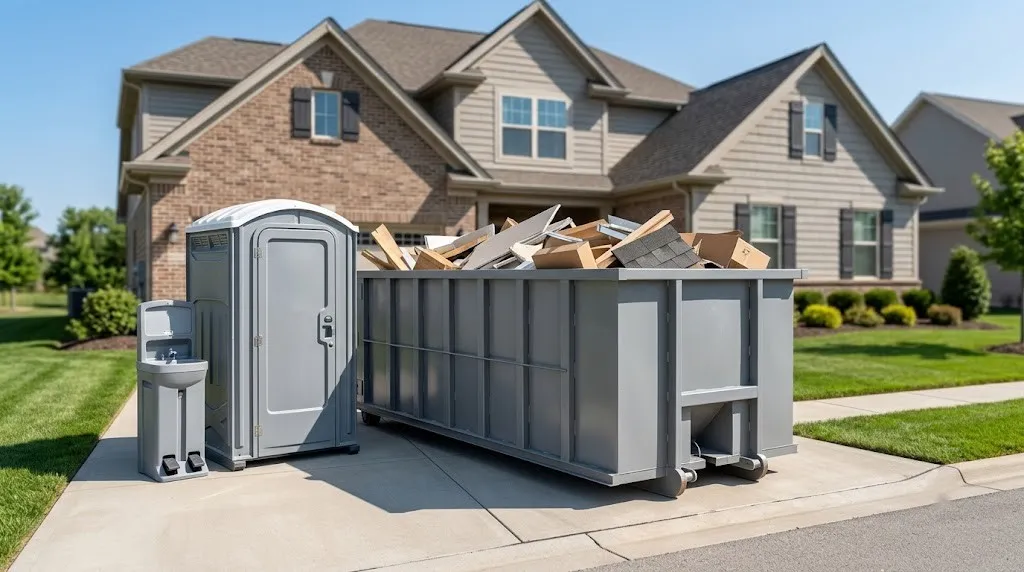
Give the service truck a straight shot. Our trucks need clear approach and backup room similar to what a roll-off needs, and a construction dumpster rental on the same lot needs about 60 feet of straight clearance behind the truck, so if you're staging both, plan the layout together. Keep units at least 20 feet from windows and fresh-air intakes if there's a building nearby. For crowd events, check the porta potty rental checklist before you finalize a layout, and see the porta potty rental page for delivery basics specific to Laredo.
Can I put a porta potty in the street or right-of-way in Laredo?
Maybe, but confirm it with the city first. We have not verified a specific Laredo ordinance number for right-of-way placement, so treat any curb, sidewalk or street placement as something that needs a call to the city before delivery day, not after. The same caution applies to dumpster placement permit questions. A dumpster placement permit cost varies by city and is not something we can quote here, so check with Laredo's permitting office directly, and see dumpster permit requirements for what to ask about. If your event is on private property, like a lot near a venue 8.3 miles northwest in Los Corralitos, you skip most of that friction, but public curb space is a different animal.
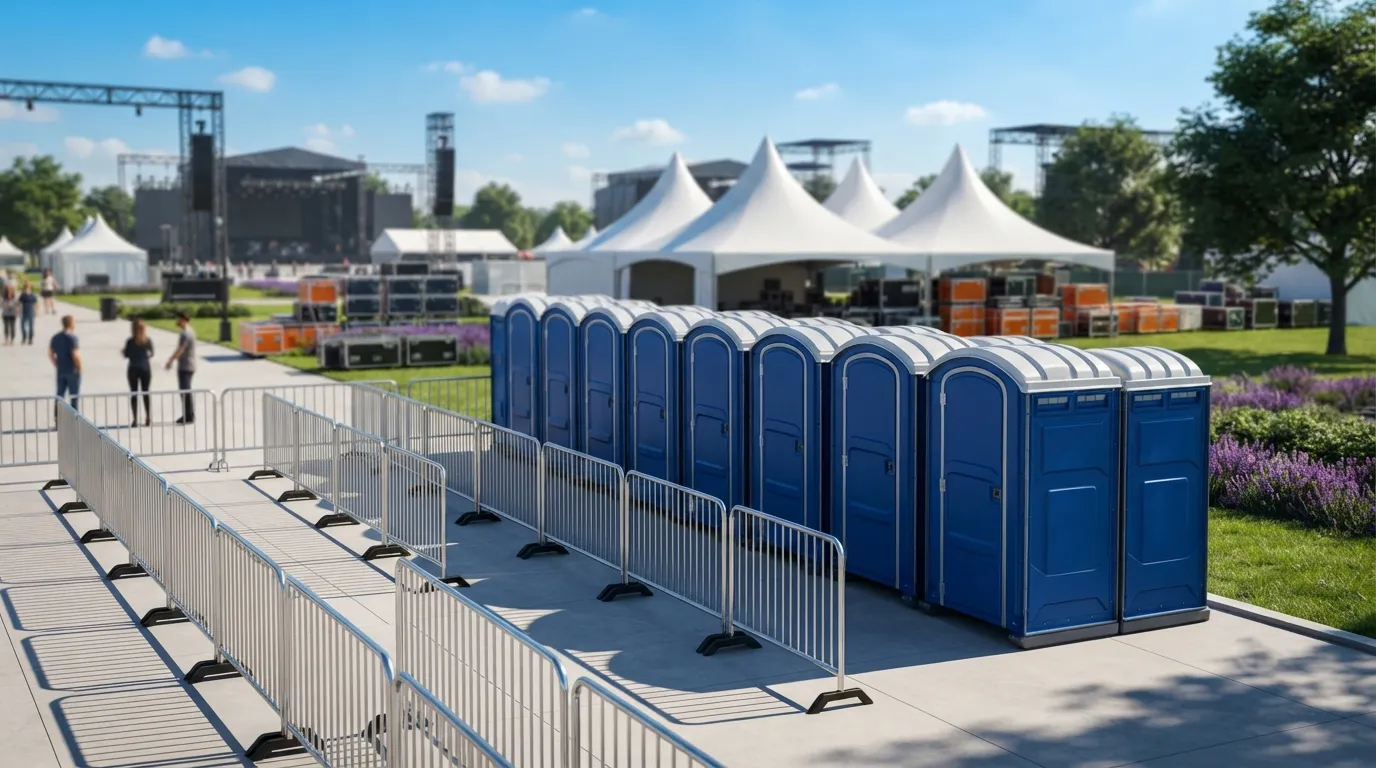
If you're renting a temporary fence rental around the unit cluster for a festival, keep the fence line back from the door swing. Barricades used for crowd control should still meet OSHA 1926.202, which calls for barricades conforming to ANSI D6.1, so don't improvise with random panels if OSHA-covered workers are on site.
How many units do I need and where do they go relative to each other?
Start with OSHA 1926.51(c), which sets 1 toilet for 20 or fewer construction workers, climbing to 1 toilet and 1 urinal per 40 workers once you pass 20, and 1 per 50 once you hit 200 or more. Space units in a row with 3 feet between them for door swing and servicing. For accessible units, ADA Standards section 213.2 requires at least 5 percent of a cluster to be accessible, never fewer than one, so a 6-unit cluster still needs one ADA unit; see ADA accessible porta potty for specs. That unit needs a 60 inch turning circle per ADA Standards section 304.3.1 and a door opening of at least 32 inches per ADA Standards section 404.2.3, so don't tuck it against a fence or dumpster where the chair can't turn.
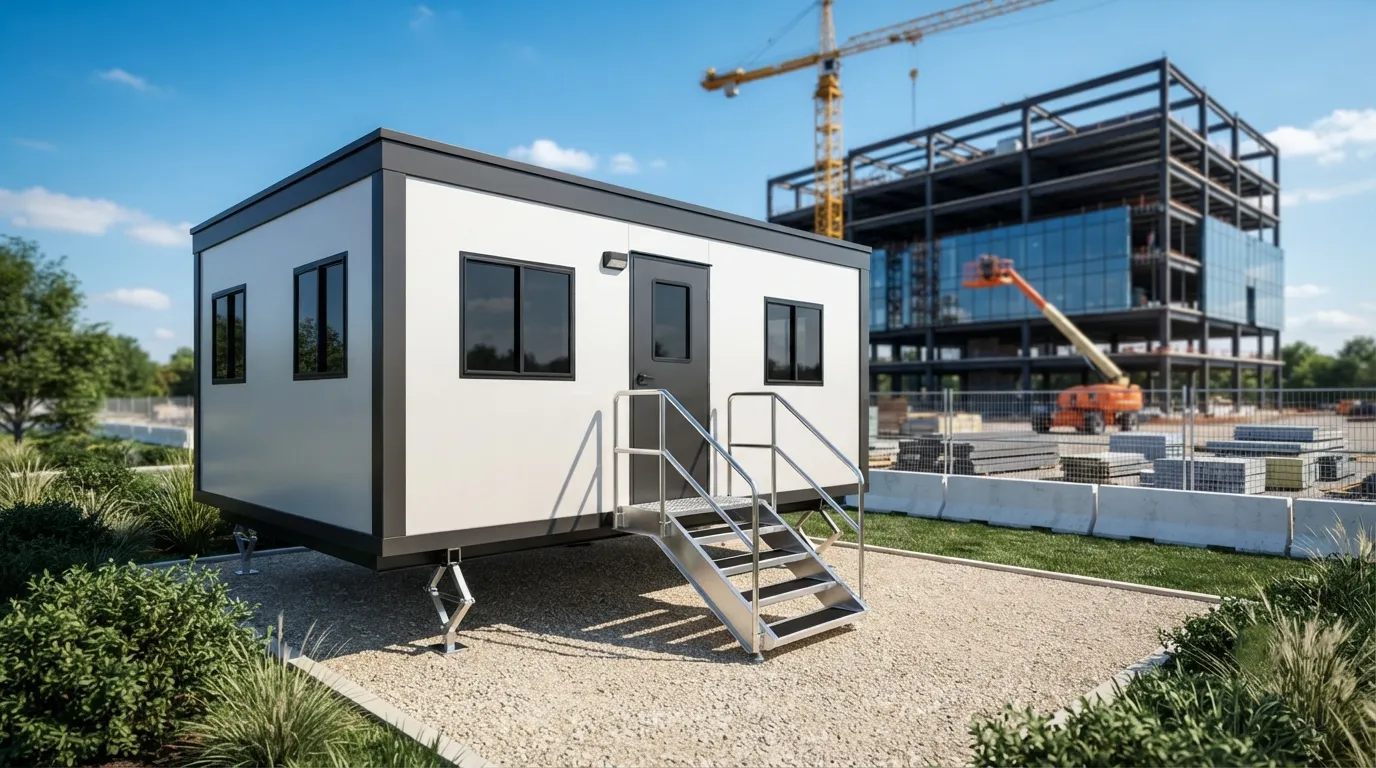
If you're running a mix of standard porta potty rental units and a deluxe flushable porta potty or two for staff, put the nicer units closer to the office trailer or check-in tent, and the standard row further out near the work zone. A mobile office trailer rental placed nearby should also have clear access. If a trailer arrives with a damaged door, mobile office trailer replacement doors are something to flag with the rental company right away rather than living with a door that won't latch through a Laredo summer.
Does placement change for restroom trailers, storage containers or handwashing stations?
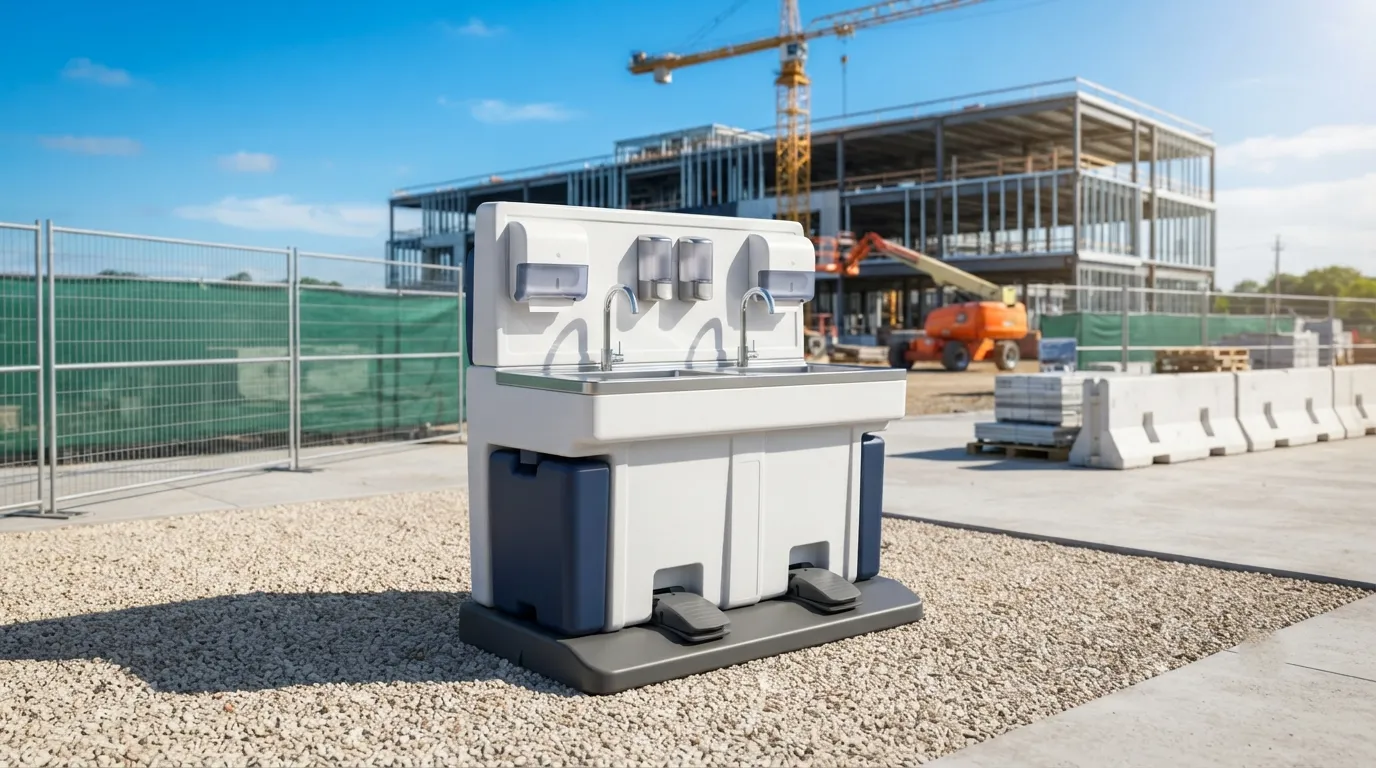
Yes. A restroom trailer rental needs level, compacted ground because it's heavier and often needs a water and power hookup; see 4 stall restroom trailer for footprint details. A storage container rental needs a flat pad too, ideally concrete or packed gravel, since a 20ft or 40ft box settling unevenly can jam the doors. Keep handwashing station rental units within a short walk of food service or paint and coating work. OSHA 1926.51(f)(1) requires washing facilities specifically where workers apply paints, coatings, herbicides or insecticides, so place a hand station right at that work zone, not back at the trailer.
If a portable sink on site needs parts, Ozark River portable sink replacement parts are a common ask for older units, and swapping a worn pump or drain fitting is usually faster than waiting on a full unit swap. For septic work supporting a site, a placement decision also affects pump truck access; the same access rules that guide a septic pumping service call apply whether you're near Laredo or as far out as a placerville septic pumping service crew might travel for a rural tank.
How far from a building should a porta potty sit?
Keep it at least 20 feet from doors, windows and air intakes where possible. Closer is fine for short events, but odor control gets harder in Laredo heat, so distance helps more than people expect.
Does a porta potty need a permit to place in Laredo?
Sometimes, especially in the right-of-way. We haven't verified a specific Laredo permit fee or code section, so confirm with the city before delivery. See porta potty permit requirements for the general questions to ask.
How much ground clearance does a standard unit need?
About 3 feet on all sides for the door and for our crew to service the tank, which holds 60 to 70 gallons on a standard unit. Tight alleys or fenced corners often don't work without adjusting the layout first.
Can an ADA unit be placed anywhere in a cluster?
No. It needs a 60 inch turning circle and a 32 inch door opening, and the approach path needs a 36 inch clear width under ADA Standards section 403.5.1. Put it at the end of a row, not squeezed in the middle.
What ground surface works best under a unit?
Compacted gravel or asphalt beats bare dirt or grass every time. ADA Standards section 302.1 calls for stable, firm, slip-resistant surfaces, and that standard is a good baseline even for non-ADA units on a Laredo job site.
Next step
Get a delivery date
Tell us the address, the dates and the headcount. We size the order and confirm the route.